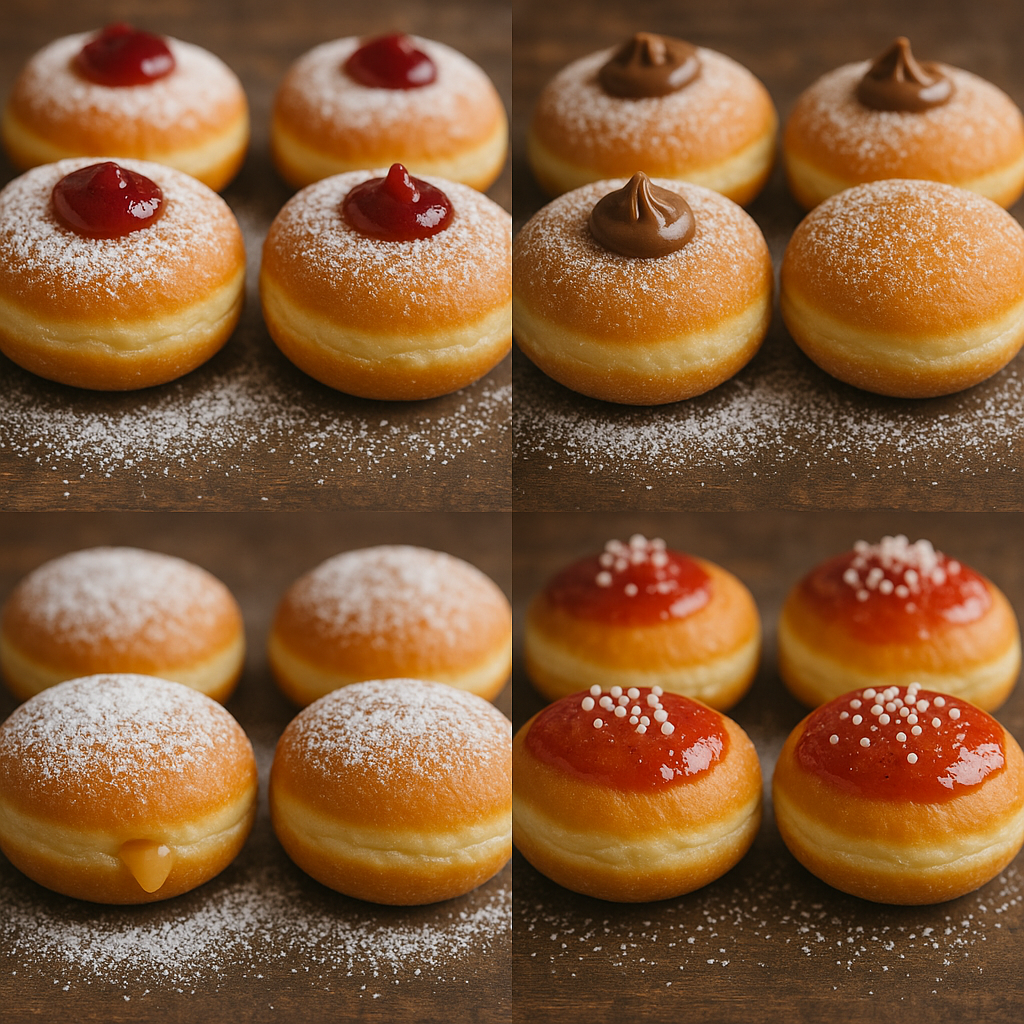
Welcome to Hanukkah History 101. Please grab your favorite doughnuts.
For 250 years before the “kindly” Roman rule, we suffered from the base and bestial Greeks. Alexander the Great captured Judea in 312 BCE. He astonishingly was tolerant of the Jewish nation and let us be. Therefore, you will find to this day, many Jewish boys called by his name. In Yiddish – Zenter / Zender.
Indeed, Sander, Saunder(s) is a very common surname. Originating in the transformation of the universal Jewish use of the ‘X son of Y’. From the 1850s, host nations began to insist on European style forenames and surnames. So, ‘Benjamin son of David’ became Ben David, or Ben Davidson. ‘Joshua son of Alexander’ became Joshua Alexander then Josh Sander or after a few generations – Jo Saunders.
Ancient Greek Culture and Atrocities Against Jews
Anyway, under Alexander, the Jews enjoyed a very brief respite. However, his successors soon reverted to default and, proto-Nazis, they ravaged us from about 250 BCE to about 160 BCE. They wrote utterly beautiful verse whilst eviscerating thousands of babies. The Greeks performed and enjoyed sublime plays whilst, outside the theater, thousands were being tortured as slowly as possible.
Their language was classical Greek. (as opposed to the modern mongrel language after four centuries of Turkish attempts to civilize them) It is often described as being ‘superior’ by the Talmud. Despite this they burned thousands of copies of that and all Jewish texts.
By the way, they did not invent democracy. They actually created its opposite – rule by the moneyed upper class. The only ‘demos’– local population – that had ‘kratos’ – power – were the wealthy, landed elite. The other 95% had the right only to be tortured, abused and killed. Gradually this fell to about 75% at the maximum and, of course, only male land owners could vote, even then.
Legacy of Democracy from Ancient Greece to Modern Times
It was nearly 1775 years later that democracy became that which we recognize. That is – the wealthy and privileged fooling and bribing the voters with billions of dollars and blatant lies. But at least each of us can choose for which lying scoundrel he wants to vote. At first, obviously again, this right was only for the white male. Presumably because the others are not so easily fooled!
Back to the Greeks!
The Maccabean Revolt and the Miracle of Hanukkah Oil
So, these were barbaric, despicable, utterly immoral and amoral hedonists. [from the Greek for pleasure ‘hedone’ of course] They made the Holy Land into a concentration camp. Eventually the priests led a rebellion which miraculously ended Greek rule. The Temple was re-sanctified and began to be used again. The Talmud tells us that everything had been defiled. Thus there was a long gap until services could continue. This would have included the daily lighting of the huge menorah. However, a single intact amphora of holy oil still with seal unbroken was found. This could last a single day. So the Maccabean priests immediately used it. However, the amphora lasted long enough for more oil to be procured to sanctified by us. This the menorah burnt every day thereon.
This is why Josephus called it the ‘Festival of the Lights’. Today we all light the Hanukkah menorah – as millions of Jews have done for over 2000 years. Also, as the miracle occurred through olive oil – we enjoy food prepared with this – especially of course – doughnuts.
Now this is a very serious point – if you are as serious about doughnuts as I am. And I mean serious – doughnuts reveal our death wish.
Hanukkah Doughnuts: Traditions and Significance
During the Hanukkah holiday, the consumption of doughnuts in Israel is a significant secular phenomenon. Emphasizing the holiday’s easily-acceptable traditions – food. The entire point of Hannukah is our unbelievable spiritual survival from a world power that wished to wipe out only our religion but not our physical presence. Provided we became Hellenised we were safe. But the Greeks butchered every observant child, woman and man. They would celebrate today’s secular Jews and purchase millions of extra doughnuts for them.
The miracle of the surviving pure oil with which we lit the Menorah is a symbol of spiritual survival. It is commemorated with foods cooked in oil. The doughnut celebrates that we rebelled, won and relit the Menorah in the ravaged Temple. That is the central message of Hannukah. It has become, for all secular Jews a chance to scoff too many incredibly over-priced doughnuts. Drowning in icing and filling of every sickly type. This absolutely reveals why secular Jews are disappearing. Not from obesity – but from a perverted blindness to the real value of their heritage. A secular Jew enjoying his purely secular doughnut proves the Greeks won after all.
Doughnut Consumption: History And Statistics
And, boy, did they win – hands down. Estimates suggest that Israelis consume tens of millions of sufganiyot throughout the eight-day celebration. While precise, universally agreed-upon statistics can vary slightly between different surveys and reporting agencies, the general consensus indicates a very high level of consumption. For instance, some reports suggest approximately 20 million sufganiyot are devoured during Hanukkah, which translates to roughly four doughnuts per person in Israel, considering its population. Other estimates place the number at around 22.5 million doughnuts consumed by Jewish people globally during Hanukkah, with a substantial portion of that in Israel. Another source indicates around 17 million sufganiyot are consumed, equating to nearly two doughnuts per person in the country.
True – the history of other fried pastries eaten during Hanukkah dates back at least to the 12th century, with Rabbi Maimon ben Yosef, father of Maimonides, referencing the custom of eating sofganim (fried fritters) as an ancient tradition. These early fritters were likely sweet, syrup-coated pancakes similar to Arabic svingous or Persian zalabia. The modern, plump, jelly-filled doughnut, however, is a Western innovation. Food historian Gil Marks dates the first modern sufganiya to 1485, appearing as gefüllte krapfen in Kuchenmeisterei, an early cookbook. This version was made from two rounds of lard-fried dough joined with jam, and Jews adapted it using goose fat for Hanukkah. It eventually travelled to Poland, where it became known as ponchiks or ponchkes.
Learning Torah, Sweet as Honey
However, these culinary delights were a special treat to emphasize the spiritual meaning. Our education emphasizing constantly using such means to engage and encourage children – ‘if a child does not enjoy studying then tempt him with nuts, a little honey, treats and bribe him;’ … ‘organize his study to make it easy and then reward him immediately for his success.’
More explicitly, the practice of giving children honey or sweet things when they begin their studies is a long-standing Jewish custom, especially when a child first begins to learn the Hebrew alphabet. This custom is rooted in the verse from Ezekiel 3:3, “Then He said to me, ‘Son of man, eat what you find; eat this scroll, and go, speak to the house of Israel.’ So I ate it, and it was as sweet as honey in my mouth”. This verse symbolically links the words of Torah with sweetness, suggesting that learning should be a delightful experience.
The custom of giving honey to children is also mentioned in later rabbinic works that draw heavily on Talmudic traditions. For example, some traditions involve writing the Hebrew alphabet on a slate, covering it with honey, and having the child lick the honey off the letters, symbolizing the sweetness of Torah. This act is not merely symbolic; it is a direct attempt to create a positive association with learning from the very beginning.
Doughnuts: A Sad Symbolism and More History
I have watched several of my own grandchildren actually doing this on their first day in ‘Cheder’ (Hebrew school for four-year olds) USA, in Israel and in England. And do not worry, they lick the honey from a newly- laminated paper with the letters on it. The whole family of course come to watch and the class gets heaps of cakes and treats.
So there is nothing anti-Semitic about doughnuts. They are merely a sad reminder of how 90% of us have evaporated! Of course, the popularity of sufganiyot in Israel is absolutely linked to historical and cultural factors. But they are a safe and non-committed caricature. The sufganiya is seen as emblematic of modern – modern secular – Israel, blending West European and Middle Eastern influences very weakly with classical Jewish tradition (mesorah).
And they really are super-secular. The intensely anti-orthodox Histadrut Labor Federation in the late 1920s actively promoted sufganiyot over latkes to create jobs for its members. Making sufganiyot required more labor for preparation, transport, and sales compared to home-made latkes, thus boosting employment in bakeries. This historical push contributed to their establishment as a prominent Hanukkah treat.
Israel’s Doughnut Industry Today
Today, non-kosher sufganiyot have become a significant industry in Israel. Non-kosher bakeries begin offering them as soon as the Sukkot holiday ends, and the variety of flavors has expanded far beyond the traditional strawberry jam to include options like cappuccino, Bavarian cream, cheesecake, and even alcohol-infused fillings. No, there is no bacon flavour – yet.
The cultural secular significance extends beyond mere consumption. Sufganiyot represent a vague community spirit and Zionistic resilience, with families gathering to share them. The Maccabeans rebelled against the Greeks like we Zionists rebel today against – everyone. The act of eating these oily treats during Hanukkah is a national secular distraction – the defiant Israelis – vastly surpassing the number of Israelis who fast on Yom Kippur!
Anti-Orthodox organizations – which have tried every which way to stamp out the insane lunacy of the orthodox – also contribute significantly to the total number of doughnuts consumed. The Israeli Army (IDF) is the largest single purchaser, buying close to half a million doughnuts and distributing them to soldiers across the country via 100 trucks. (No – I am certain that they absolutely do not make sure they contain a specifically non-kosher ingredient.) The Ministry of Defense alone purchases upwards of 400,000 doughnuts for its soldiers each Hanukkah, with 80% being jelly-filled and 20% chocolate-filled, reflecting soldier preference!!!
Another notable, though anonymous, orthodox man in Jerusalem every year orders 350,000 doughnuts to distribute to the poor, ensuring that more Israelis can partake in the holiday joy. I must give him my address!
You see, it is really worth keeping some connection to your heritage.
From Meal Offerings to Jelly Doughnuts
The serious point is of course, that even such a trivial activity cannot have arisen from nowhere.
Although the earliest references are only about 1500 years ago, we definitely made doughnut type small buns every day in the temple era 400 BCE. They were all part of the ‘meal’ offerings. They are minutely described in the Talmud – including the methods of cooking them. Hand-size pieces of dough were thrown into bubbling hot oil. No, I do not think they had jelly/jam/custard cream centers. Others were thrown into scalding water – yes, bagels, already! The three others were thin wafers, normal bread loaves and matzoh.
Now it impossible that the Jews of the Temple era did not use these type of breads/ pits in their every day diets also. So, your family have been eating doughnuts for millennia. No wonder diabetes is a Jewish trait.
Back to Hanukkah proper.
We cannot believe the Jewish accounts. So what are the non-Jewish sources for the Festival of Hanukkah which celebrates the end of Greek rule? They seems to be a consensus amongst the non-Jewish writers of the period, which is summarized below. Interestingly these accounts were of course written for, read and thus verified to a great extent by non-Jews who had lived through the events. It rare to find non-governmental contemporary accounts generally accepted if they are incorrect.
Non-Jewish Historical Sources on the Maccabean Revolt
Non-Jewish records describe the Maccabean Revolt as a Jewish rebellion against the Seleucid Empire and Hellenistic influence, primarily spanning 167 to 160 BCE, with continued conflict until 134 BCE when the Maccabees secured independence
This revolt was triggered by the repressive policies of Seleucid King Antiochus IV Epiphanes, who, in 168 BCE, launched a campaign against the Jewish religion. His actions transformed the Second Temple into a site for a syncretic Pagan-Jewish cult .
The rebellion began as a guerrilla movement in the Judean countryside, led by Mattathias and his five sons, including Judas Maccabeus . Mattathias sparked the uprising in 167 BCE by refusing to worship Greek gods and killing a Jew who complied, as well as the Greek officer enforcing the sacrifice. After Mattathias’s death, Judas Maccabeus took leadership, transforming the guerrilla movement into a proper army . A significant early victory occurred in 164 BCE when the Maccabees captured Jerusalem, leading to the cleansing and re-dedication of the Second Temple on 25 Kislev, an event commemorated by the festival of Hanukkah.
While the Seleucids initially relented and unbanned Judaism, the more radical Maccabees continued to fight for a complete break from Seleucid rule and full political independence. Judas Maccabeus died in 160 BCE at the Battle of Elasa, but his brother Jonathan Apphus continued the resistance . Internal divisions within the Seleucid Empire eventually provided the Maccabees with an opportunity for independence . In 141 BCE, Simon Thassi, another brother, expelled the Greeks from their citadel in Jerusalem and established the independent Hasmonean state, which was further secured by an alliance with the Roman Republic.
Key Events and Leaders in the Maccabean Revolt
Non-Jewish accounts and archaeological evidence continue to corroborate the Maccabean Revolt. The historical accounts of Josephus, particularly “The Jewish War” and “Jewish Antiquities,” provide detailed narratives, supplementing the books of 1 and 2 Maccabees. Josephus, a secular estranged Jew writing for a Greek audience, quotes in length from documents written at the time of the revolt and had access to resources that allowed him to integrate Greek histories and other sources into his work. Greek historians like Polybius and Diodorus Siculus also offer insights into the period.
Archaeological Evidence Supporting the Hanukkah Story
Archaeological discoveries have provided tangible evidence related to the revolt. For instance, a rare wooden box containing 15 silver coins, minted by Ptolemy VI between 176/5 BCE and 171/0 BCE, was found in Muraba’at Cave in the Judean Desert . The latest coin’s date suggests the hoard was hidden around the beginning of the Maccabean Revolt or the events leading up to it, possibly by someone fleeing Antiochus IV’s decrees . This find offers direct archaeological evidence of the Judean Desert caves being used by Jewish rebels or fugitives during this tumultuous period.
The “Helidorus stele,” discovered in 2007 and dating to around 178 BCE, provides insight into Seleucid government appointments and policies immediately preceding the revolt. Furthermore, the Givati Parking Lot dig in Jerusalem (2007–2015) has uncovered evidence of the Acra, the citadel garrisoned by Greeks and pro-Seleucid Jews, which helps resolve discrepancies between Josephus’s and 1 Maccabees’ accounts of its fate.
Political and Cultural Dimensions of the Maccabean Revolt
The Maccabean Revolt was not solely a religious struggle but also involved significant political and cultural dimensions. While 1 Maccabees emphasizes the zealous killing of sinners and armed struggle, 2 Maccabees highlights martyrdom and Divine Intervention as crucial to the victory.
The conflict also involved a civil war between traditionalist Jews in the countryside and Hellenized Jews in the cities, with Seleucid intervention often playing a role. Sounds a little like modern Israel – if it were not under constant attack from outside.
The Hasmonean dynasty, established after the revolt, started to blend Jewish traditions with Hellenic culture, using both Hebrew and Greek on coinage and hiring Greek mercenaries, while also fostering a new sense of Jewish nationalism. Yes, we are our own worst enemies.
Legacy of Greek Influence on Jews
Thus, it is extremely important to realize that actually the Greeks won – culturally. The entire period ended with Herod (who killed the remnants of the Hasmoneans) taking over. He was, if Jewish, only slightly Jew-ish, and soon made a bond with Rome that led to Rome’s even worse hegemony.
Ironically, Zionism, like the Maccabean revival, flowered in about 1848, blossomed in 1948 and will wither by 2048 – because there will a vanishing number of secular true Zionists. Their childless, selfish woke world has exterminated them and their ‘culture’. But at least they can enjoy the Tel Aviv night life.
Relevance of Hanukkah to Jewish Heritage and History Validation
Now what is the relevance to us of all this stuff about doughnuts, revolting priests and even more revolting Greeks? Well, we are interested in how history validates the Jewish story and our insistence on all our laws and documents being ancient and authentic.
And what were the Maccabees fighting about? They claim it was because they were not allowed to circumcise their children, keep the Sabbath or learn the Torah. An entire nation tried to commit suicide by fighting the strongest occupying power ever known, in order to keep thousands of detailed customs – which did not exist?
Would they have done this over a recently-published compendium called the Five New Books of Moses? Could they have claimed they were protecting an ancient religion given to them a thousand years earlier, were that untrue? Would the Greeks have also similarly described Judaism? They proudly stated that they were annihilating the ancient religion of these obdurate Jews which they had practiced for over a thousand years.
The Torah was universally known as an ancient, revered text. Millions of Jews knew it by rote. It is nonsense to suggest it was a recent best-seller available online from Amazon or even a patchwork of muddled texts and versions made up a couple of centuries earlier. We absolutely disproved that ignorant and misleading nonsense promulgated by Wellhausen and the Christian Bible Cretins, earlier.
The Septuagint: Greek Translation of Jewish Texts
And what was the background to the Greek attempt to snuff us out. Their sudden awareness of what we stood for. The absolute opposite of their degraded “culture.”
Just prior to the beginning of the Greek savagery, we have the first translation of the entire Jewish canon. The Septuagint is the Greek translation ordered by Ptolemy II. The gentile records indicate this was 245 BCE.
This suggests that, some 50 years after taking over Judea, the Greeks thought this text worth the effort of translating and thereby they prove its existence as a whole! It is impossible that, at that date, it was some vague bundle of recent texts. It was old and revered. Had it been only a century or two old and invented and concocted by Ezra – c350 BCE (like the Wellhausen Cretins claim) – it would have not been worth the attention! The Greeks would scarcely have been interested in some modernistic post-Jewish creation cooked up in Babylon. They knew of and wanted the ancient Text of Jews and its secrets. When they saw what it contained – the exact opposite of hedonism – they had to annihilate us or at least our culture.
Well, bad luck. We’re still here – and they are a dusty heap of ruins! Whatever remains of Greece today is a third world debt ridden society. Their “pure” culture is diluted by 4 centuries of Ottoman rule. (Yes, they tried the Muslim version of the civilizing mission in Greece) And we got the doughnuts!
Leave a Reply